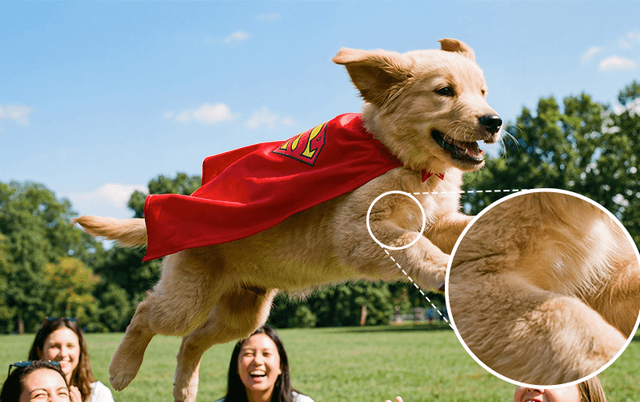
Turn a Photo into Pixel Art in Photoshop (Mosaic + Grid)
You’ll learn how to isolate a subject, pixelate it with the Mosaic filter, and ensure fully solid pixels by stacking layers. Then you’ll build a custom 1‑px grid pattern that aligns perfectly with your pixel size and add a subtle drop shadow. A final Hue/Saturation adjustment gives the effect a vibrant finish.

Step-by-step instructions
Isolate your subject
Open your image.
Use any selection tool (e.g., Quick Selection Tool) to select the object; precision isn’t critical.
With the base layer selected, press Ctrl/Command+J to copy the selection to a new layer.
Pixelate with the Mosaic filter
Select the subject layer.
Go to Filter → Pixelate → Mosaic.
Set Cell Size to 25 (remember this value for the grid).
Click OK.
Solidify the pixelated layer
Press Ctrl/Command+J twice to create three identical pixel layers.
Select all three pixel layers, right-click, and choose Merge Layers.
Alt/Option-click the merged layer’s thumbnail to load the opaque pixels as a selection, then click Add Layer Mask.
With the merged pixel layer selected, press Ctrl/Command+J six times to eliminate any semi-transparent edges.
If any areas remain slightly transparent, go to Layer → New Fill Layer → Solid Color, choose a neutral gray, click OK, and place it below the pixel layer.
Convert to a Smart Object for easy styling
Shift-click to select the pixel layer and the gray Fill Color layer.
Right-click and choose Convert to Smart Object.
Create a grid pattern that matches the pixel size
Note your main document’s resolution via Image → Image Size (e.g., 72 ppi).
Create a new document with Width: 25 px, Height: 25 px, Resolution: same as the main document.
Double-click the Background layer to unlock it, then double-click again to open Layer Style → Stroke.
Set Stroke to 1 px, Position: Inside, Color: Black; click OK.
Set Fill to 0% so only the stroke remains, then go to Edit → Define Pattern, name it, and click OK.
Overlay and style the pixel grid
Return to the main document and duplicate the pixel layer (Ctrl/Command+J).
Double-click the duplicate and choose Pattern Overlay; select your grid pattern and keep Scale at 100%.
Set Fill to 0% to show only the grid.
Right-click the layer and choose Rasterize Layer Style.
Double-click the layer and add a subtle Drop Shadow to create a 1‑px depth; adjust Opacity to taste (e.g., 30%).
Lower the grid layer’s Opacity to about 30%, group the grid and pixel layers, and add a Hue/Saturation adjustment clipped to the group with Saturation set to +20%.